Ragi is one of the most nutritious grains available in India. Here’s why it should be part of your child’s daily diet — and how to make it work.
Every parent in India has heard “give your child milk for strong bones.” But here’s what nobody tells you — ragi has more calcium than milk. Per 100 grams, finger millet contains around 344mg of calcium. Whole milk has about 120mg. The numbers don’t lie.
So why isn’t every parent already feeding their kids ragi every day? Mostly because nobody marketed it aggressively. There’s no mascot, no celebrity endorsement, no colourful packet promising your child will become a genius. It’s just an honest grain that has been quietly nourishing South Indian families for over 4,000 years.
What exactly is ragi?
Ragi is finger millet — a small reddish-brown grain grown widely across Karnataka, Tamil Nadu, Andhra Pradesh, and Kerala. It’s been a staple food in these regions long before protein powder companies existed. Farmers ate it for sustained energy through long working days. Mothers fed it to children for healthy growth. Grandmothers used it for recovery after illness.
It never disappeared. It just got ignored while packaged health foods took over supermarket shelves.
What ragi actually does for your child
Calcium for bone development. Iron for brain function and preventing anaemia. Dietary fibre for healthy digestion. Essential amino acids — including methionine, which is rare in plant foods — for overall development. Natural carbohydrates that digest slowly, meaning your child stays full and energetic rather than getting a sugar spike followed by a crash.
The slow digestion point matters more than people realise. Most children’s food today — biscuits, flavoured drinks, packaged snacks — is built around fast sugar. It gives a quick burst of energy that collapses within an hour. A ragi-based breakfast gives steady energy through the morning, which means better focus, better mood, and less constant hunger.
Who should be eating ragi?
Toddlers from 6 months onwards — ragi porridge is one of the most recommended first foods by paediatricians across South India. School-age children who need sustained concentration and physical energy. Teenagers going through growth spurts who need calcium and iron. Adults managing weight, since ragi’s fibre content keeps you satisfied longer. Elderly people who need bone support without dairy.
Basically — everyone. But it’s especially powerful for children in the 1 to 12 age group.
Why most ragi products in the market are not as healthy as they claim
This is the part that most brands won’t say. A lot of commercial ragi products add refined sugar to improve taste, artificial flavours to make it more appealing, and fillers to reduce cost. By the time it reaches you in a fancy packet, the actual ragi content might be less than 40% of what’s inside.
If you’re buying ragi products for your child’s health, the ingredient list should be short. You should recognise every word on it. If you don’t know what an ingredient is, your child’s body probably doesn’t need it.
How to add ragi to your child’s diet starting tomorrow
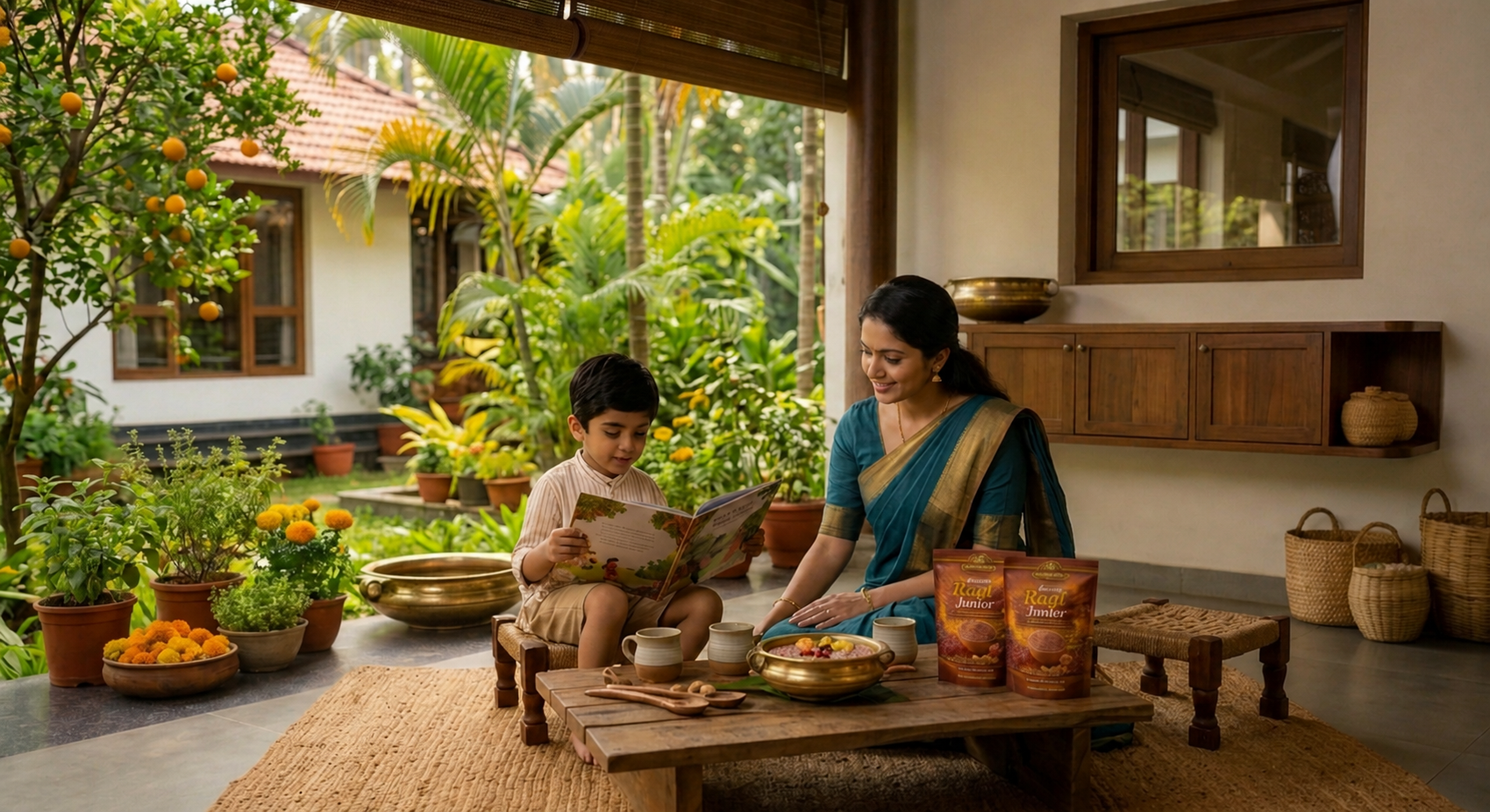
Morning porridge — two tablespoons of ragi powder in warm milk, a pinch of cardamom, a little jaggery if your child needs it sweet. Done in five minutes. Chapati — replace 30% of your wheat flour with ragi flour. The chapati will be slightly darker and denser but your child won’t refuse it if they’re used to it. Ladoos — ragi, ghee, jaggery, and nuts. Traditional, delicious, and genuinely nutritious. Dosa batter — add ragi to your regular dosa mix for a more nutritious breakfast.
Start with one meal. Keep it consistent. That’s enough.
Why Choose JR NutriGlow?
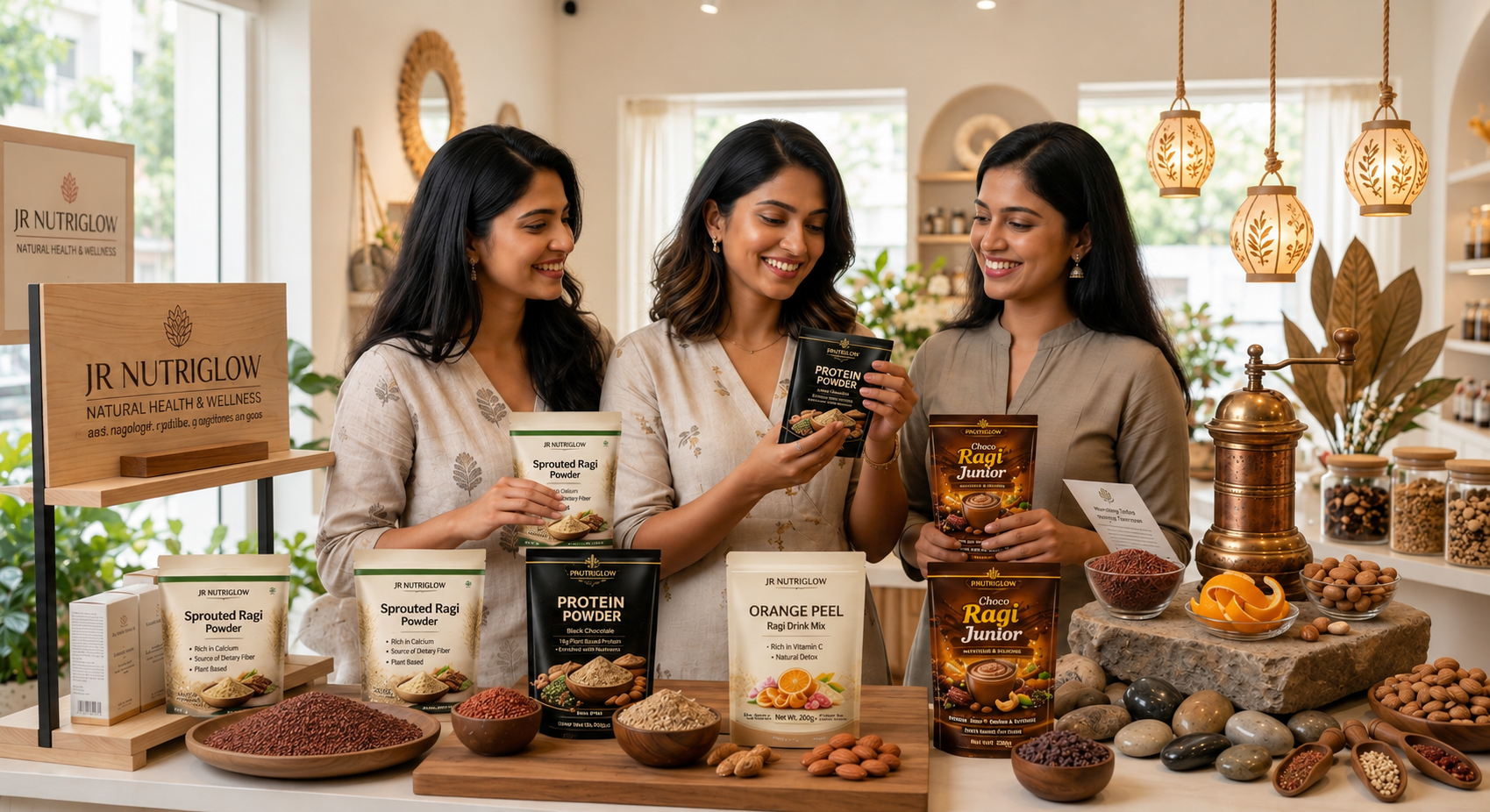
We believe that health shouldn’t be complicated or artificial. Our philosophy is built on five pillars:
100% Natural Ingredients: No hidden chemicals or preservatives.
Sprouting Excellence: We use sprouted grains to maximize nutrient bioavailability.
Protein-Rich: Focused on building strength and stamina naturally.
Family First: Formulations safe and effective for ages 2 to 80.
Traditional Wisdom: Ancient recipes backed by modern nutritional science.
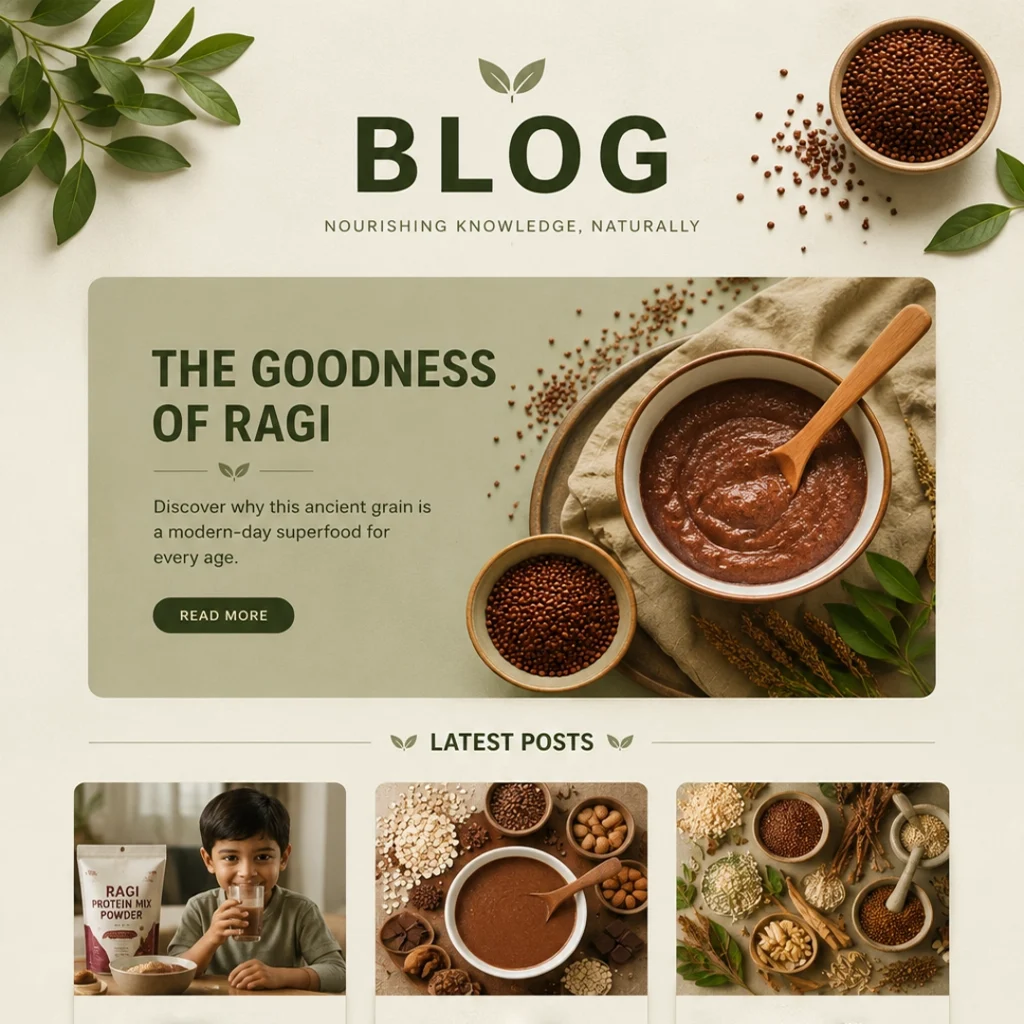
Benefits of Natural Protein Mix in Daily Life
Protein isn’t just for bodybuilders. Discover how a plant-based, natural protein source helps repair tissues, boosts immunity, and keeps you satiated throughout a busy workday.
raditional Foods for Modern Living
Why are we going back to our roots? Learn about the “Ancient Grain” revolution and how ingredients like Millets and Jaggery are replacing processed alternatives in modern kitchens.
Healthy Breakfast Recipes Using Protein Mix
Short on time? We’ve curated five 10-minute breakfast recipes—from protein pancakes to savory porridges—that ensure you never skip the most important meal of the day.
Healthy Morning Habits for Better Energy
Productivity starts before you open your laptop. We explore the “Golden Hour” habits: hydration, light movement, and the perfect nutrient-dense breakfast